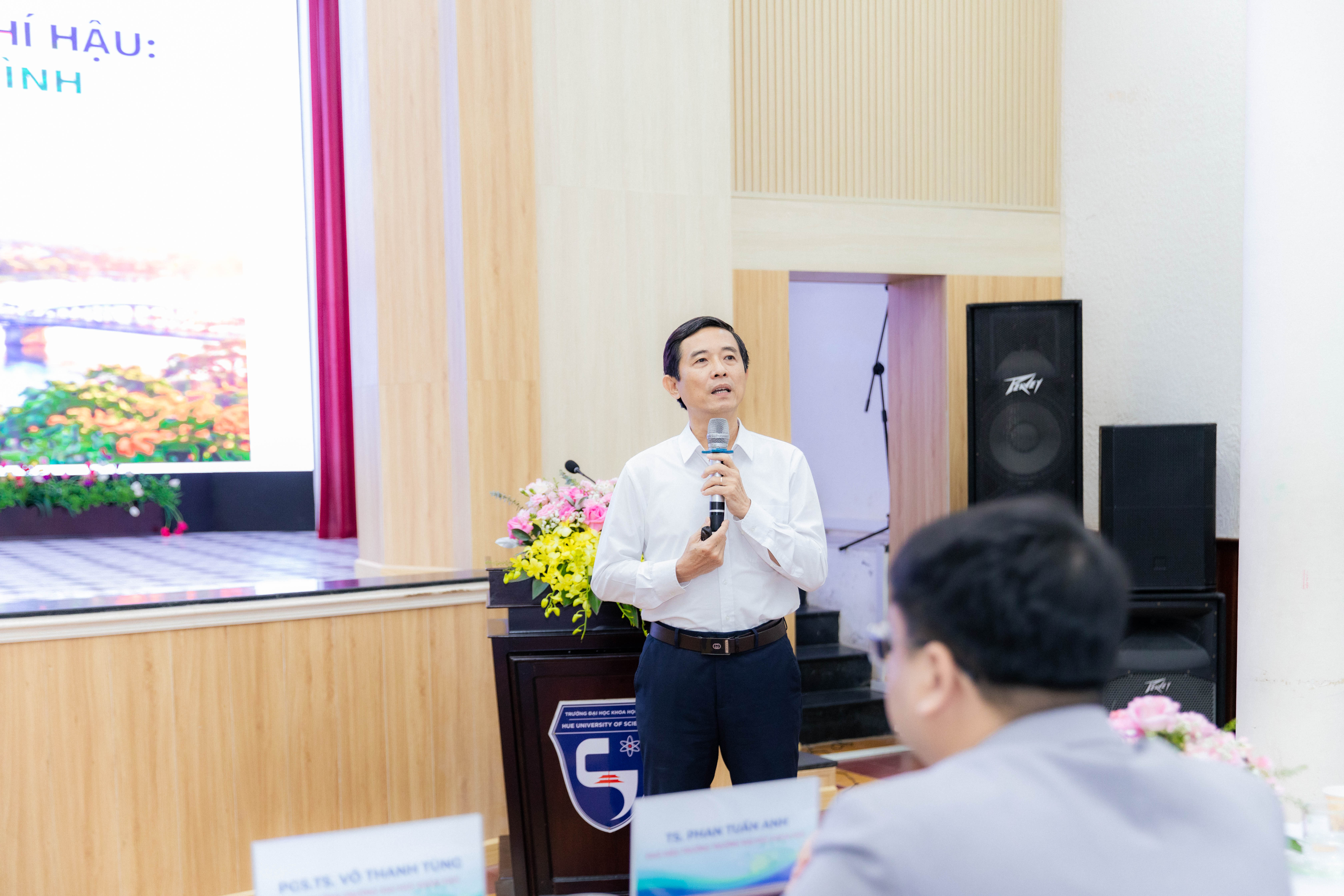
University of Sciences, Hue University, co-organizes the workshop on the implementation of Vietnam’s commitments at COP26

On October 9, 2026, the Department of Climate Change under the Ministry of Agriculture and Environment, in collaboration with the University of Sciences, Hue University, organized the workshop on implementation of Vietnam’s commitments at the 26th conference of the Parties to the United Nations Framework Convention on Climate Change (COP26).
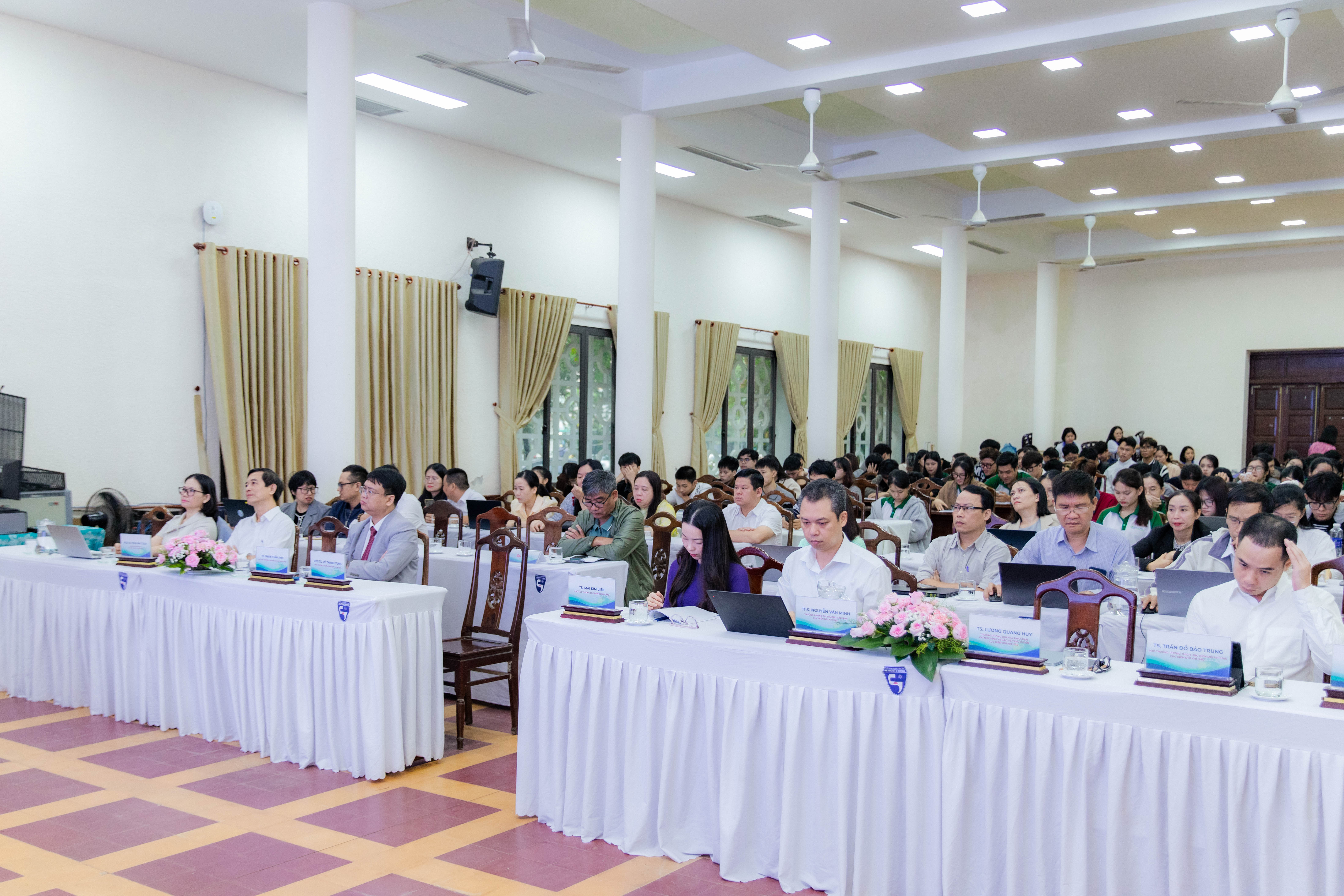
Attending the workshop, there were Dr. Mai Kim Lien, Deputy Director General of the Department of Climate Change, Ministry of Agriculture and Environment; Assoc. Prof. Vo Thanh Tung, Rector of the University of Sciences, Hue University; and Dr. Phan Tuan Anh, Vice Rector of the University. Other participants included experts and speakers from the Department of Climate Change, lecturers from the University of Sciences, representatives of the affiliated universities of Hue University including the University of Agriculture and Forestry, and several other universities in Hue City, as well as a large number of students.
The workshop aimed to raise awareness among government agencies, organizations, and communities about climate change response, while facilitating the exchange of information and the sharing of knowledge and proposing solutions to advance the implementation of Vietnam’s commitments at COP26. These efforts contribute to the country’s goal of achieving net-zero emissions by 2050.
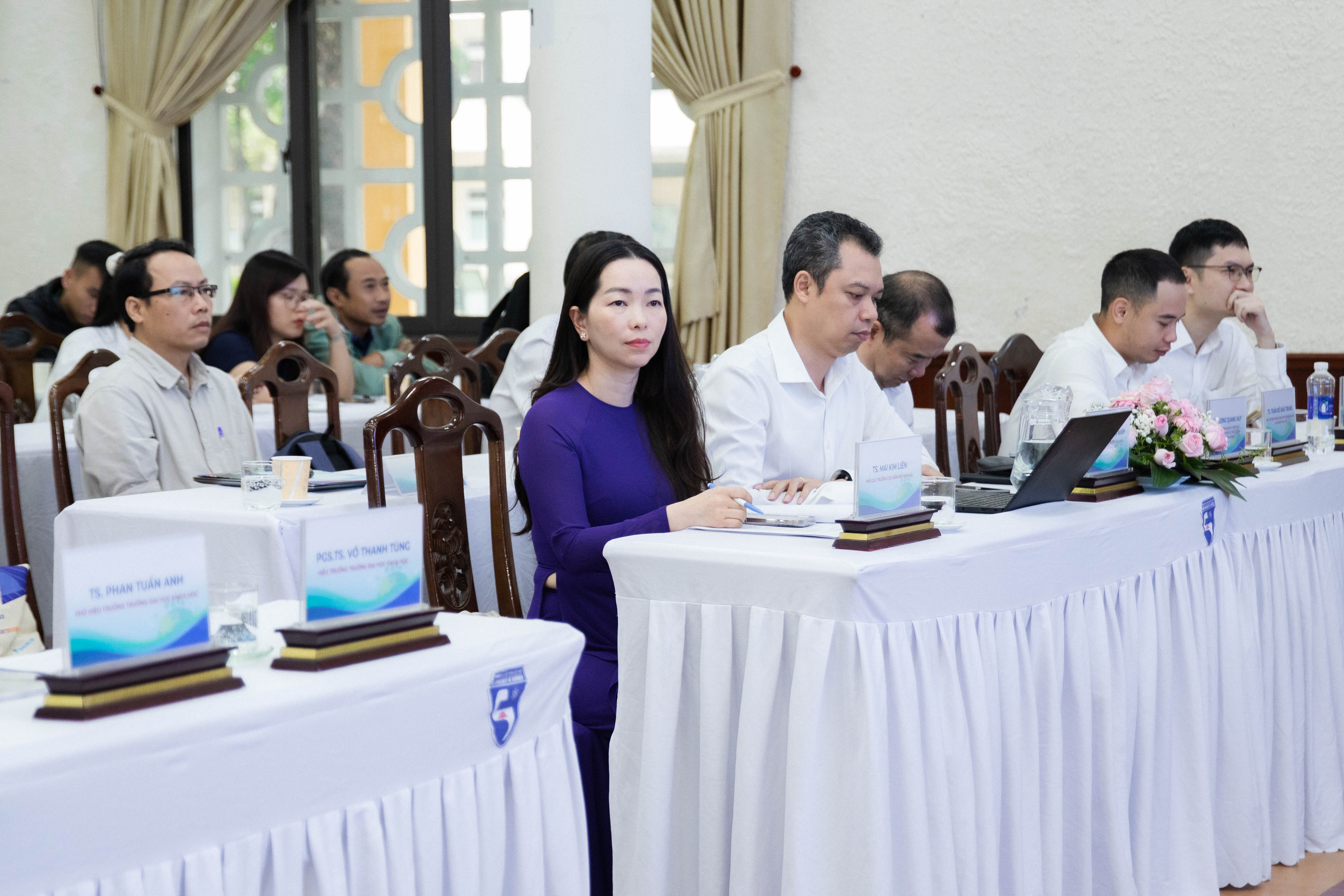
In her opening remarks, Dr. Mai Kim Lien, Deputy Director General of the Department of Climate Change, Ministry of Agriculture and Environment, affirmed that responding to climate change is a central and ongoing priority in achieving the national target of net-zero emissions by 2050 and promoting sustainable national development. She also emphasized the pivotal role of universities in providing scientific evidence, proposing practical solutions, and training highly qualified human resources. Through the workshop, the relevant authorities sought to gather ideas and initiatives from faculty members and students to bridge the gap between academic knowledge and practical implementation. She also called on the wider community to translate commitments into concrete actions by reducing emissions in both production activities and everyday life.

Speaking at the workshop, Assoc.Prof. Vo Thanh Tung, Rector of the University of Sciences, Hue University, indicated that fulfilling the commitments made at COP26 requires concerted efforts from all sectors of society, with universities playing a central role. The University has identified “Environment, Natural Resources, Climate, and Sustainable Development” as a key priority research area. It is committed to strengthening interdisciplinary research in support of local development while serving as a bridge between national policies and practical climate change response efforts in Hue City.

The workshop also provided an opportunity to strengthen professional exchange and foster collaboration among government agencies, higher education institutions, and students in raising awareness and promoting action toward sustainable development.
During the workshop, there were five thematic presentations addressing key issues, including climate change response policies and legislation in Vietnam; Vietnam’s efforts to fulfill its international commitments to greenhouse gas emissions mitigation, with the aim of achieving net-zero emissions by 2050; the implementation of international commitments on climate change adaptation in Vietnam; climate change response in Hue City under the International Green City Program; and the establishment and development of Vietnam’s carbon market, from the legal framework to practical implementation.


The presentations provided insights into policy directions, legal frameworks, and the challenges arising in the implementation of climate commitments. In particular, the presentation on climate change response in Hue City highlighted the opportunities and challenges facing the locality as it works toward green and sustainable urban development.
As part of the program, participants exchanged views, discussed relevant issues, shared information, and raised questions with the speakers on topics related to greenhouse gas emissions mitigation, climate change adaptation, and carbon market development. The discussions helped clarify policy implementation requirements while strengthening connections among government agencies, experts, the University, and students in communicating climate-related information, raising public awareness, and promoting action to address climate change.


The workshop constituted a practical initiative to disseminate knowledge, provide updates on climate policies, and strengthen professional dialogue on climate change. Through these activities, it contributed to enhancing public awareness and community responsibility in fulfilling Vietnam’s commitments at COP26, thereby supporting the country’s transition toward green and sustainable development.



.jpeg)